
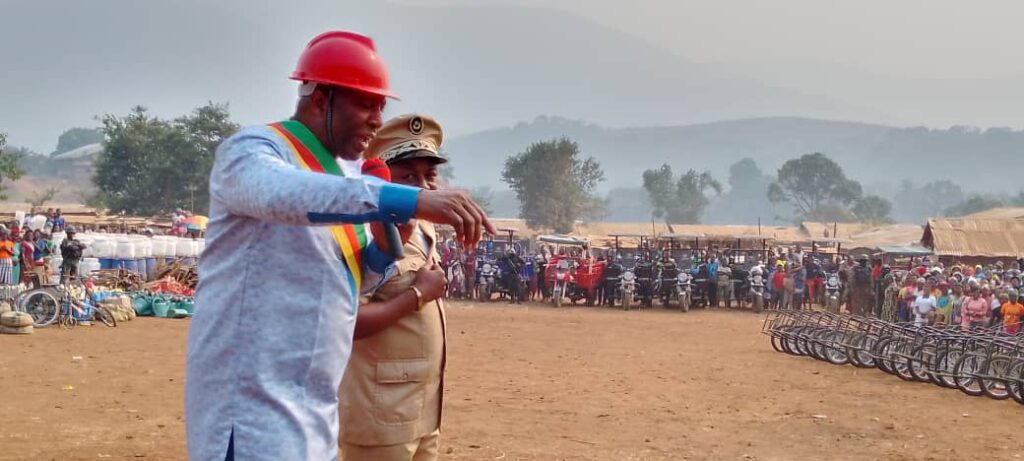

Through the distribution of various farm equipment and materials, the council has laid a strong foundation for sustainable development, poverty reduction, and peaceful coexistence within the municipality.
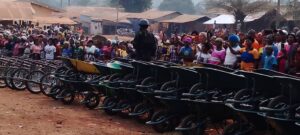
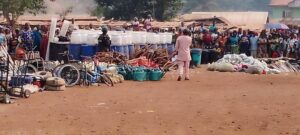
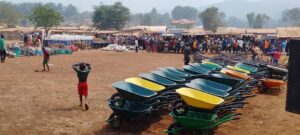
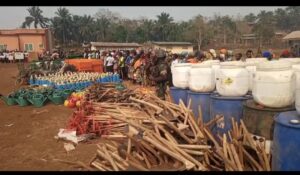
The farm equipment recently distributed by the Benakuma Council include fermenting tanks, cassava milling machines, trucks, tricycles, cutlasses, hoes, spraying cans, farming boats, and several other essential agricultural tools.
In recent years, the people of Benakuma Municipality have faced numerous challenges that threatened their livelihoods, social cohesion, and economic progress. The municipality, located in the North-West Region of Cameroon, has endured the devastating effects of the Anglophone crisis, intertribal conflicts, and recurrent attacks by armed Fulani herdsmen. This crisis disrupted farming activities, displaced families, destroyed property, and significantly weakened the local economy.
Amidst these challenges, the Mayor of Benakuma Council demonstrated visionary leadership by implementing an ambitious agricultural empowerment program aimed at reviving the local economy and restoring hope among the population. Through the distribution of various farm equipment and agricultural support materials, the council has laid a strong foundation for sustainable development, poverty reduction, and peaceful coexistence within the municipality.
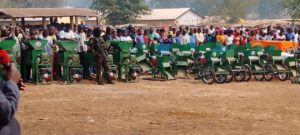
The farm equipment distributed included fermenting tanks, cassava milling machines, trucks, tricycles, cutlasses, hoes, spraying cans, farming boats, and several other essential agricultural tools. This intervention has become one of the most impactful development initiatives undertaken by the council in recent years.
Revitalizing Agricultural Production
Agriculture remains the backbone of Benakuma’s economy.
The majority of the population depend on farming for income and food security. However, years of insecurity discouraged many farmers from cultivating large farms, leading to reduced agricultural output and increased poverty.
The distribution of modern farm equipment has greatly transformed agricultural activities across the municipality. Farmers now have access to tools that increase efficiency, reduce labour costs, and improve productivity. Cassava milling machines, for instance, have enabled farmers to process cassava more quickly and efficiently, reducing post-harvest losses while increasing the value of their produce.
Similarly, fermenting tanks have improved the processing and preservation of agricultural products, allowing farmers to meet market standards and generate better incomes.
The provision of spraying cans has enhanced crop protection against pests and diseases, leading to higher yields and improved food security.
The availability of cutlasses, hoes, and other farming tools has also encouraged many farmers to return to their fields after years of uncertainty. As agricultural production increases, households are becoming more economically stable and self-reliant.
Creating Employment and Boosting Local Incomes
One of the most significant impacts of the equipment distribution initiative has been the creation of employment opportunities. The operation and maintenance of cassava milling machines, trucks, and tricycles have generated direct and indirect jobs for many young people within the municipality.
The trucks and tricycles provided by the council have improved transportation services, enabling farmers to move their produce from remote villages to local markets more efficiently. This has reduced transportation costs and minimized post-harvest losses, thereby increasing farmers’ profits.
Young entrepreneurs have also benefited from the initiative by engaging in agricultural processing, transportation services, and equipment management. As more economic activities emerge around agriculture, household incomes continue to improve, reducing dependency and promoting financial independence among residents.
The increased circulation of money within the municipality has stimulated local commerce, strengthened small businesses, and contributed significantly to the overall economic growth of Benakuma.
Promoting Food Security and Rural Development
Food security is an essential component of community development. The council’s investment in agriculture has enabled farmers to cultivate larger areas of land and improve productivity. Increased production of cassava, maize, beans, vegetables, and other food crops has enhanced food availability throughout the municipality.
The farming boats distributed to communities located near rivers have facilitated access to fertile agricultural lands that were previously difficult to reach. This has expanded farming opportunities and encouraged greater participation in agricultural activities.
Furthermore, the initiative has improved living standards in rural communities. Families now have better access to food, improved incomes, and greater confidence in their future. The visible progress resulting from agricultural empowerment has renewed hope among many residents who had been discouraged by years of instability.
Restoring Peace Through Economic Empowerment
Perhaps the most remarkable achievement of this initiative lies in its contribution to peacebuilding and social stability. Communities affected by conflict often experience unemployment, poverty, and frustration, which can fuel further tensions and insecurity.
By empowering farmers and creating economic opportunities, Benakuma Council has addressed some of the root causes of social unrest. Productive economic engagement has provided many young people with meaningful livelihoods, reducing their vulnerability to involvement in violence and criminal activities.
The distribution of agricultural equipment was carried out in a manner that encouraged inclusiveness and community participation. Beneficiaries from different villages and backgrounds were brought together under a common objective of economic development. This has strengthened cooperation among communities and fostered a renewed sense of unity.

As people work together to cultivate their farms, process agricultural products, and market their produce, relationships that were once strained by conflict are gradually being rebuilt. Agriculture has become a powerful tool for reconciliation and community healing.
Overcoming the Effects of Crisis
The Anglophone crisis severely affected economic activities throughout the North-West Region, including Benakuma. Schools were disrupted, businesses closed, and many families were displaced. Intertribal conflicts further weakened social cohesion, while attacks by armed herdsmen created fear and uncertainty among farming communities.
Against this backdrop, the council’s agricultural intervention represents a practical and sustainable response to post-conflict recovery. Rather than focusing solely on relief assistance, the initiative empowers people to rebuild their own livelihoods and contribute actively to local development.
The equipment distributed has restored confidence among farmers and demonstrated that development can continue even in difficult circumstances. Communities that once struggled to recover are now witnessing renewed agricultural activity, increased market participation, and growing economic resilience.
A Model for Sustainable Local Development
The success of Benakuma Council’s agricultural empowerment program offers valuable lessons for other municipalities facing similar challenges. It demonstrates that strategic investment in agriculture can simultaneously promote economic growth, poverty reduction, food security, and peacebuilding.
The leadership displayed by the Mayor and the council administration reflects a strong commitment to improving the welfare of citizens through practical and people-centered development initiatives. By prioritizing agriculture, the council has invested directly in the sector that sustains the majority of the population.
The distribution of farm equipment by the Mayor of Benakuma Council marks a significant milestone in the municipality’s development journey. Through the provision of fermenting tanks, cassava milling machines, trucks, tricycles, cutlasses, hoes, spraying cans, farming boats, and other agricultural tools, the council has empowered farmers, stimulated economic growth, and strengthened social cohesion.
Beyond increasing agricultural productivity, the initiative has provided hope to communities recovering from the devastating effects of the Anglophone crisis, intertribal conflicts, and attacks by armed herdsmen. By creating employment opportunities, improving food security, and fostering cooperation among citizens, the project has become a powerful instrument for both economic transformation and peacebuilding.
Today, Benakuma stands as an inspiring example of how visionary local leadership, combined with strategic investment in agriculture, can rebuild communities, restore livelihoods, and pave the way for lasting peace and prosperity.
